
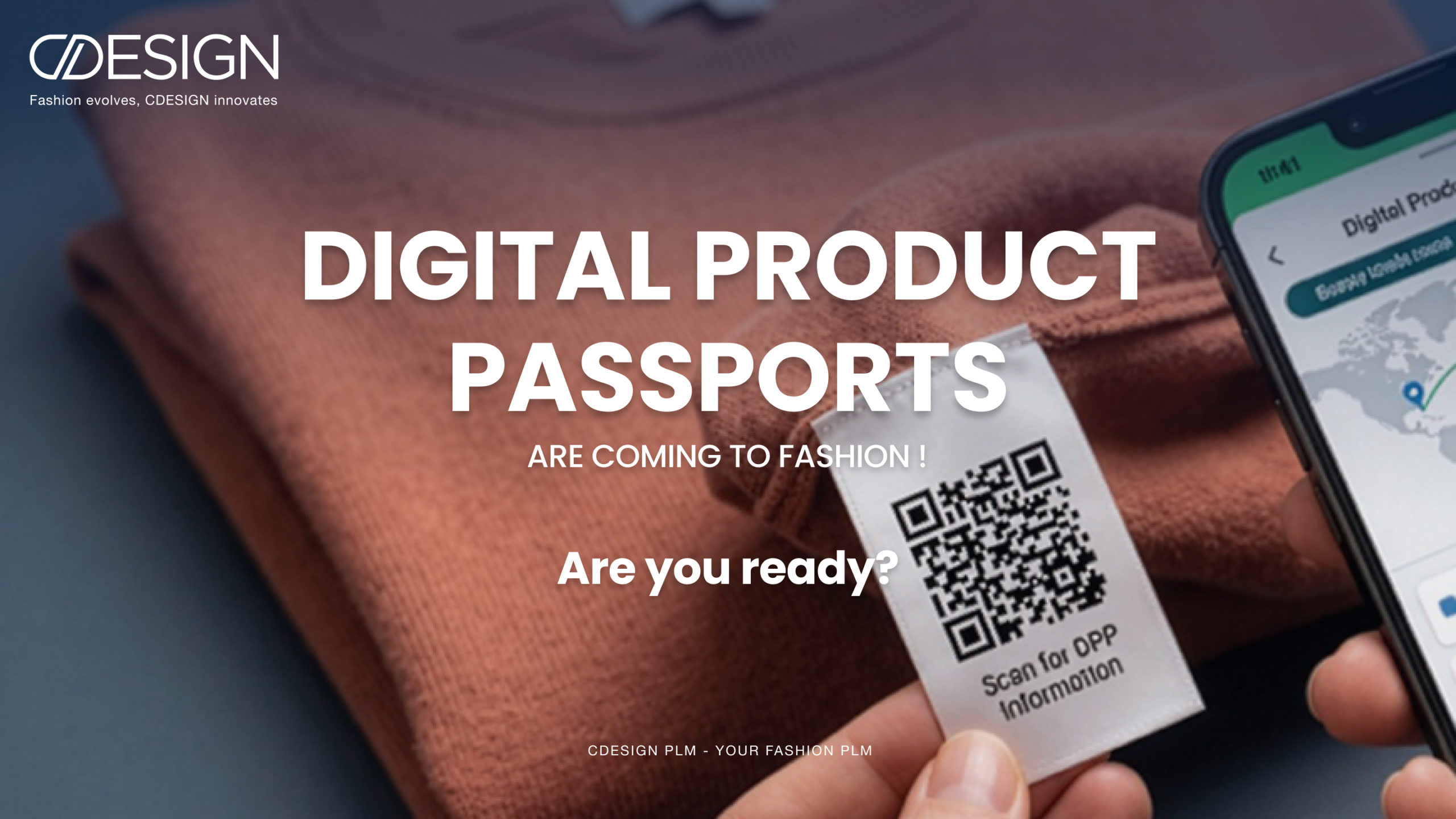
Digital Product Passport (DPP): Why PLM Is Becoming Essential for Fashion Product Traceability
The Digital Product Passport is coming to the textile and fashion industry
The sustainable transformation of the fashion industry is accelerating. With the progressive implementation of the new European ESPR regulation (Ecodesign for Sustainable Products Regulation), fashion brands will need to strengthen transparency, traceability, and product data management throughout the entire lifecycle of their collections.
At the heart of this evolution is the Digital Product Passport (DPP).
This new system aims to provide complete and accessible information about each product, including material origins, composition, suppliers, manufacturing processes, environmental impact, repairability, and recyclability.
For the fashion, textile, and apparel industry, the Digital Product Passport will become a major challenge in the coming years, with implementation expected for several product categories as regulations progressively come into force.
The Digital Product Passport: a challenge in collecting and structuring product data
Implementing a Digital Product Passport is not simply about creating a digital product sheet. The real challenge lies in a brand’s ability to collect, structure, and secure all the required product information.
A textile product involves a large amount of data coming from multiple sources:
- Materials and components used;
- Detailed product composition;
- Raw material origins;
- Suppliers and manufacturing partners;
- Environmental certifications;
- Manufacturing processes;
- Transportation and supply chain information.
Without an efficient data management system, meeting traceability requirements and regulatory compliance becomes increasingly complex.
The strategic role of PLM in preparing Digital Product Passports
A PLM system (Product Lifecycle Management) plays a key role in this transition.
By centralizing all information related to product development, a PLM creates a reliable single source of product data that can efficiently support future Digital Product Passports.
CDESIGN PLM helps fashion brands prepare for this evolution by structuring and managing all essential product information:
- Product data and components;
- BOM (Bill of Materials);
- Supplier information;
- Materials and compositions;
- CSR and traceability data;
- Regulatory compliance information.
This centralization improves collaboration between design teams, product development teams, purchasing departments, suppliers, and production partners.
Anticipating European regulations with an integrated PLM approach
Fashion brands that start structuring their product data today will gain a strategic advantage when Digital Product Passport requirements become mandatory.
Integrating traceability and sustainability data directly into PLM workflows enables brands to:
✔️ Improve product data reliability;
✔️ Simplify supplier data collection;
✔️ Facilitate compliance with European regulations;
✔️ Accelerate environmental reporting and product information requirements;
✔️ Strengthen transparency and trust with consumers.
The Digital Product Passport: an opportunity to build a more transparent fashion industry
Beyond being a regulatory requirement, the Digital Product Passport represents a real opportunity for fashion brands.
By relying on an efficient fashion PLM solution, companies can gain better control over their product lifecycle, highlight their sustainability commitments, and improve operational efficiency.
Brands that anticipate the implementation of Digital Product Passports today will be better prepared for tomorrow’s environmental requirements and will benefit from a significant competitive advantage.
With CDESIGN PLM, fashion companies can structure, secure, and manage the product data needed to support a more transparent and sustainable future.